


Tank vs. Tankless Water Heaters: Which One Is Right for Your Home?
 Reviewed by Brendan Lee, C-36 Licensed Plumbing Contractor
|
Published March 23, 2026
|
Updated August 6, 2026
|
7 min read
|
C-36 Licensed Plumbing Contractor, Lic. #1127602
Reviewed by Brendan Lee, C-36 Licensed Plumbing Contractor
|
Published March 23, 2026
|
Updated August 6, 2026
|
7 min read
|
C-36 Licensed Plumbing Contractor, Lic. #1127602
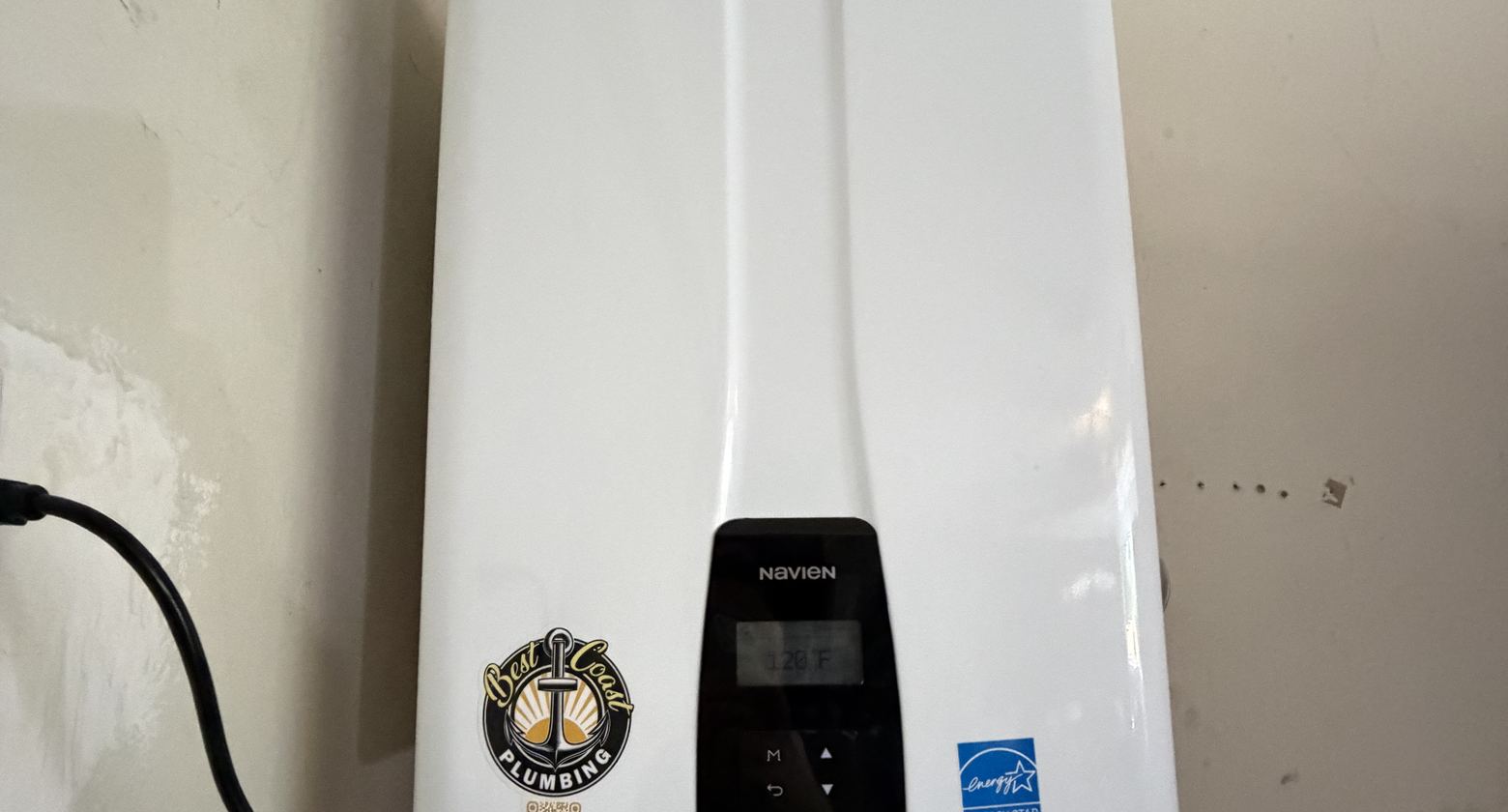
Choose a tank water heater when upfront cost and a simple like-for-like swap matter most; choose tankless when you want continuous hot water, space savings, and a 20-plus year lifespan and your gas service supports it. Tankless units run 24 to 34 percent more efficient for typical homes per the Department of Energy, but correct sizing and annual maintenance decide whether you ever see it.
If your water heater is on its way out, you are facing a fork in the road: replace like for like with another tank, or switch to a tankless system. Both are good technology. The right answer depends on your household, your gas and electrical service, and how long you plan to stay in the house.
Here is the honest comparison we give customers at the kitchen table, without the sales spin in either direction.
How does each type work?
A traditional tank heater stores 40 to 80 gallons of hot water and keeps it at temperature around the clock, reheating as the tank cools. A tankless (on-demand) unit heats water only as it flows through the unit, so there is no stored supply and no standby reheating.
That one design difference drives almost every practical tradeoff between them. Water heating is the second biggest energy user in most homes, about 18 percent of the utility bill according to the U.S. Department of Energy, so the efficiency question is worth real money either way.
What are the honest tradeoffs?
| Tank | Tankless | |
|---|---|---|
| Upfront cost | Lower: simpler unit and simpler install | Higher: unit plus possible gas or venting upgrades |
| Operating cost | Pays to keep stored water hot 24/7 | Heats only what you use; DOE rates on-demand units 24 to 34 percent more efficient for typical households |
| Hot water supply | Limited by tank size, then a recovery wait | Continuous at the unit’s rated flow |
| Simultaneous use | Fine until the tank empties | Limited by flow rate; sizing is everything |
| Lifespan | Roughly 8 to 12 years | Often 20 or more with regular maintenance, per DOE |
| Space | Full closet or garage corner | Wall-mounted, about the size of a carry-on |
| Maintenance | Periodic flush, anode rod checks | Annual descaling, especially in hard water areas |
Which one fits which household?
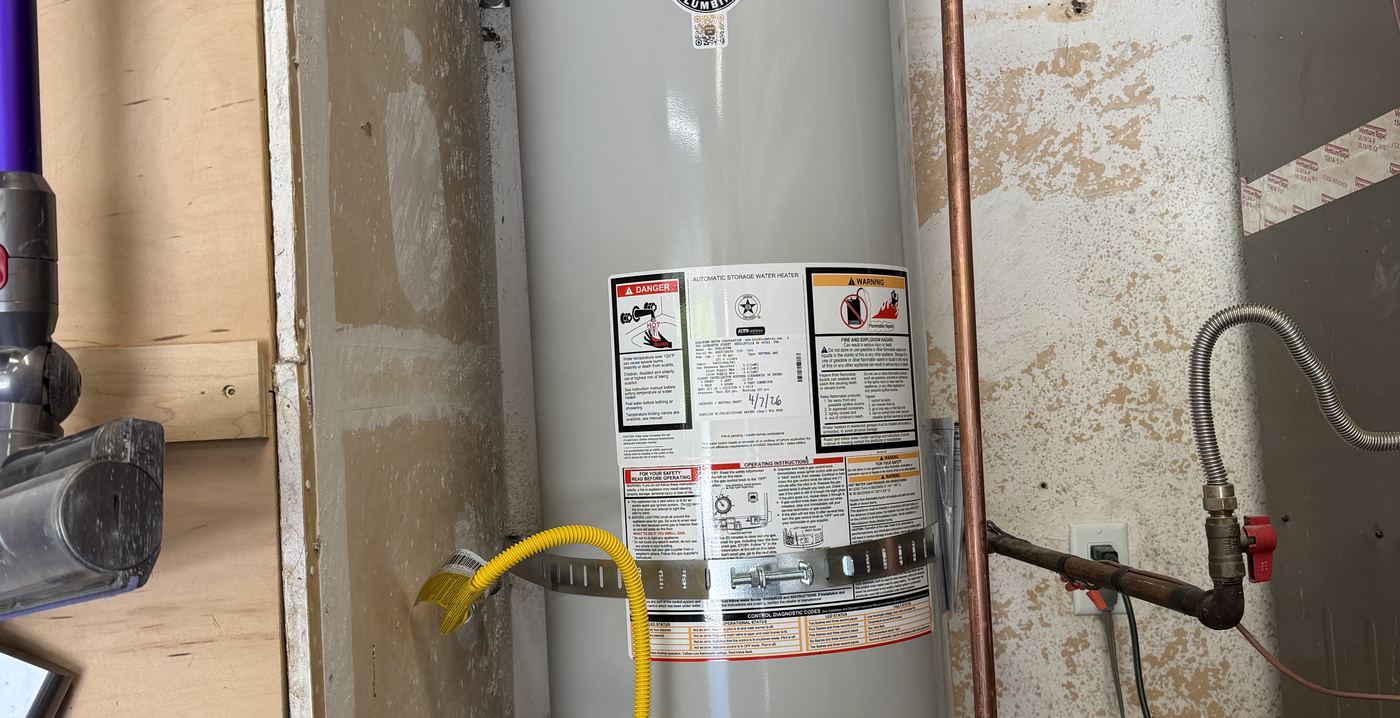
A tank still makes sense when the budget is tight, the existing gas and venting fit a like-for-like swap, and household hot water use comes in predictable bursts. It is proven, cheap to install, and any plumber can service it.
Tankless earns its higher install cost when the household runs long showers back to back, when the garage or closet space matters, when you plan to stay in the home long enough for efficiency and lifespan to pay back, and when the home’s gas service can support the burner (a common upgrade item worth confirming through our gas line service before committing). One honest caveat for our area: Southern California’s hard water means annual descaling is not optional on a tankless unit; skipped maintenance is the main reason they disappoint.
What are the signs your current heater is failing?
- Water that runs lukewarm, fluctuates, or recovers slowly after use.
- Rusty or discolored hot water, or rust at the unit’s fittings and base.
- Popping or rumbling during heating: sediment cooking on the tank bottom.
- Moisture, drips, or corrosion in the drip pan.
- Age: a tank past 10 years is living on borrowed time, and past 12 you are choosing the timing of the replacement or letting it choose for you.
A leaking tank is the one to move on immediately: tanks fail at the seams, and a weep becomes a flood without warning. If you see water, shut the inlet valve and the fuel or power, then call our water heater team. Our post on what to do first in a plumbing emergency walks through the shutoff steps.
Does installation quality really matter that much?
More than the brand does. Correct sizing (a tankless unit sized to your actual simultaneous demand, a tank sized to your household), code-compliant gas and venting, seismic strapping, a proper drip pan and drain, and a pressure check on the incoming line decide whether a heater delivers its rated lifespan. Both ENERGY STAR and the manufacturers publish efficiency numbers assuming professional installation; a bargain install quietly spends that efficiency.
Best Coast Plumbing installs and services both types across Thousand Oaks and the surrounding Ventura and LA County area. For a free assessment of which fits your home, call (805) 410-9197.
Questions Homeowners Ask Us