


The Hidden Plumbing Problems We Commonly Find During Home Inspections
 Reviewed by Brendan Lee, C-36 Licensed Plumbing Contractor
|
Published July 6, 2026
|
Updated August 6, 2026
|
6 min read
|
C-36 Licensed Plumbing Contractor, Lic. #1127602
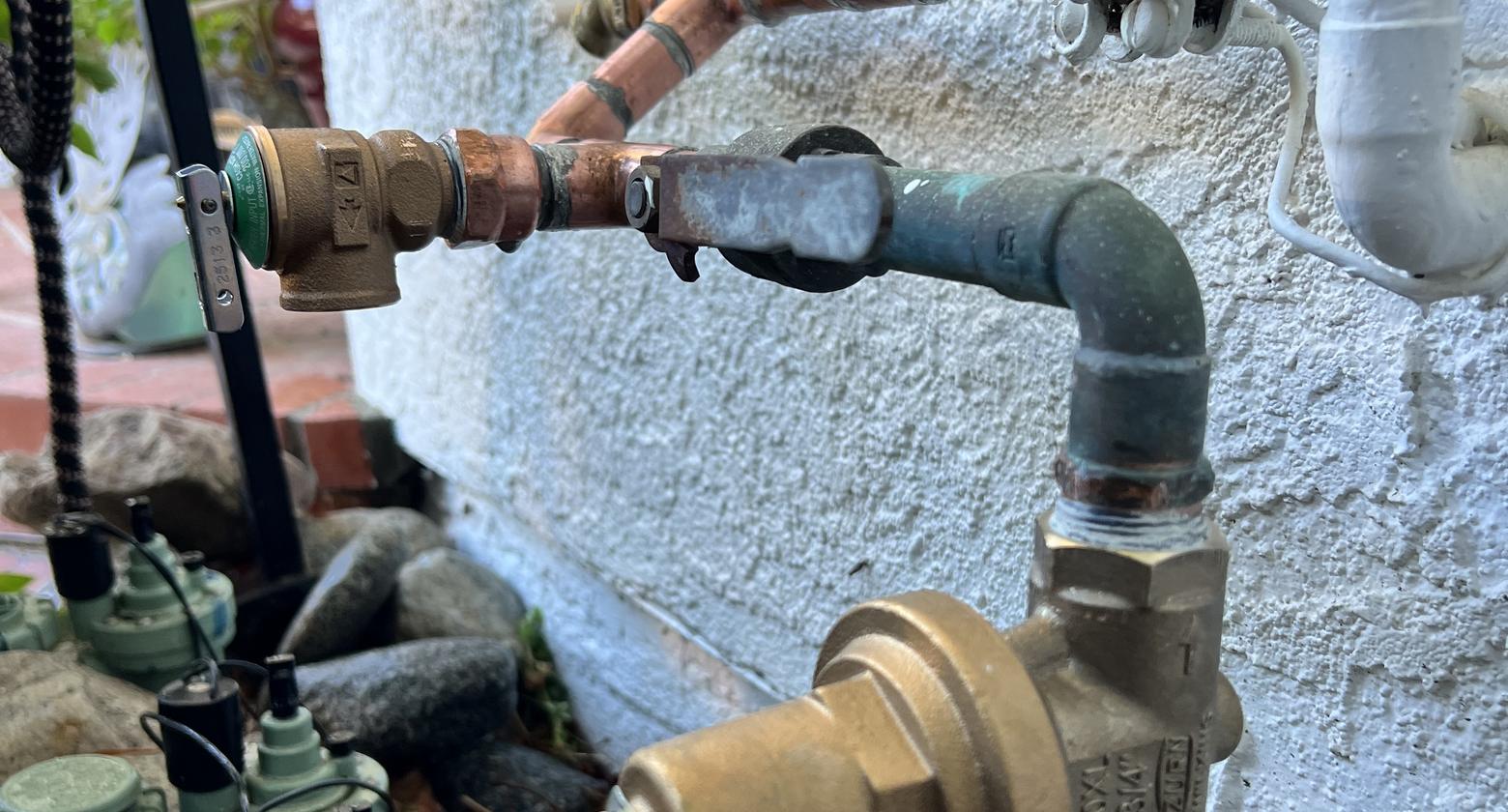
The problems we find most during home inspections are failing shutoff valves, aging water heaters, corroded drain lines, hidden supply leaks, tree root intrusion, and excess water pressure. All six develop quietly over years, and all six are far less expensive to fix when they are caught before they fail.
Most of the expensive plumbing repairs we handle did not start as emergencies. They started as small, quiet problems that sat unnoticed for months or years, usually because nobody had a reason to look.
Our crew inspects plumbing systems across Thousand Oaks, the Conejo Valley, and the surrounding Ventura and LA County area every week, during service calls, home sales, and pre-remodel walkthroughs. The same handful of hidden problems keeps showing up. Here is what we find most often, and what each one means for your house.
Which hidden plumbing problems show up most often?
Across the inspections we run, these six issues account for the large majority of what we flag. None of them announce themselves, which is exactly why they get expensive.
| Hidden problem | Why it goes unnoticed | What it leads to |
|---|---|---|
| Failing shutoff valves | Nobody touches them until an emergency | A valve that will not close when a line bursts |
| Aging water heater | Rust and sediment build up out of sight | Sudden failure, leaks, or a flooded garage |
| Corroded drain lines | Pipes deteriorate inside walls and under floors | Recurring slow drains, then a failed line |
| Hidden supply leaks | Drips inside walls or under slabs | Mold, rot, and high water bills |
| Tree root intrusion | Roots enter the sewer lateral underground | Backups and a damaged sewer line |
| Excess water pressure | Feels like a great shower | Stress on every pipe, valve, and appliance |
Why do shutoff valves fail right when you need them?
Shutoff valves spend years doing nothing, then get asked to work perfectly in an emergency. Older gate valves corrode internally and seize, so when a supply line lets go at midnight, the valve either will not turn or will not fully close. During an inspection we test the main shutoff and the fixture stops under sinks and behind toilets. Replacing a seized valve on a calm Tuesday is a small job. Discovering it mid-flood is not.
How do you know a water heater is on borrowed time?
Rust around fittings, corrosion at the base, sediment noise (a popping or rumbling sound during heating), and moisture in the drip pan all point to a water heater nearing the end of its service life. Most tank heaters last about 8 to 12 years, and the anode rod that protects the tank is rarely replaced. We check the age plate, the anode, the temperature and pressure relief valve, and the condition of the flue and gas connection on every inspection.
What does pipe corrosion look like from the outside?
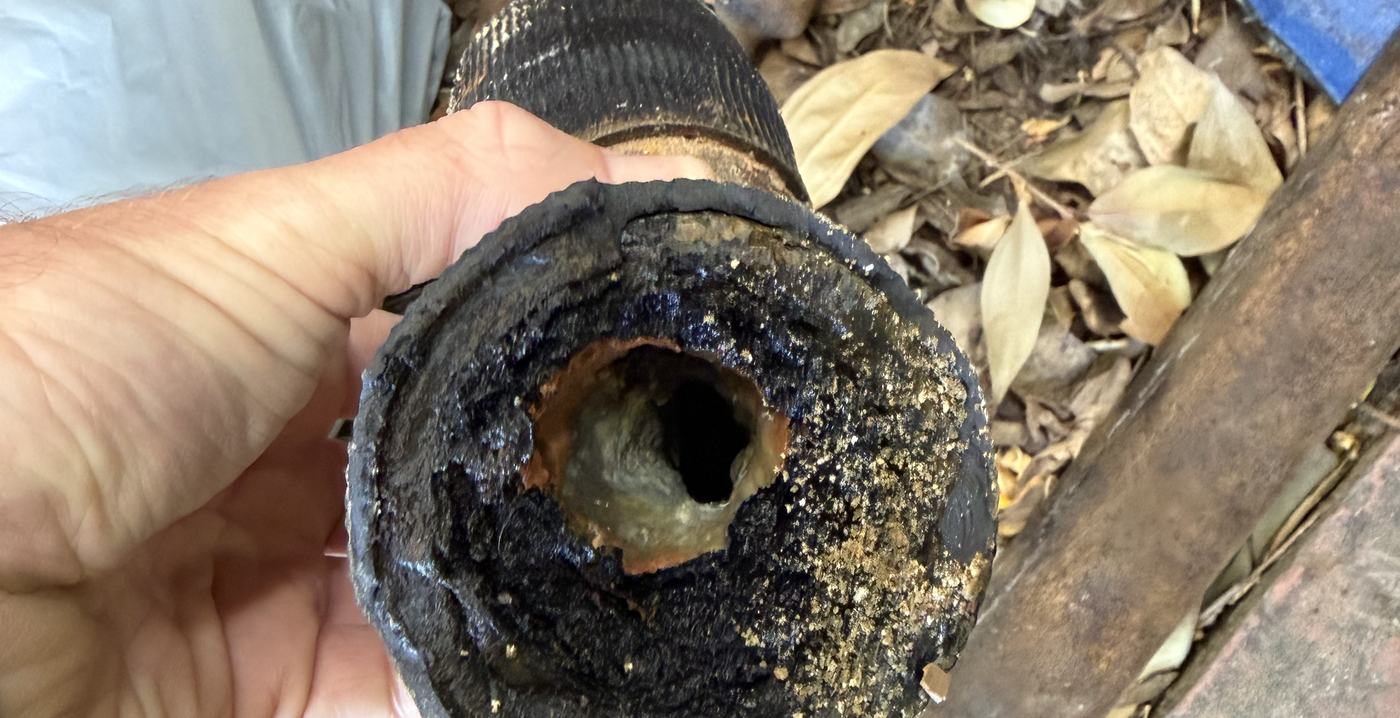
The photo above is a drain section from one of our own jobs, and it is typical of what we find in homes built before the 1980s. A lot of the original housing stock in Thousand Oaks, Newbury Park, and the older parts of the Conejo Valley still runs on its first generation of galvanized steel or cast iron drain lines. From the outside the pipe looks solid. Inside, corrosion and buildup slowly choke it closed, which is why the drains keep slowing down no matter how often they get snaked. If that pattern sounds familiar, our post on why drains keep clogging goes deeper on it.
How big a deal are hidden leaks, really?
Bigger than most homeowners expect. The EPA estimates that household leaks waste nearly 10,000 gallons of water per home every year, and that roughly one home in ten has a leak wasting 90 gallons or more per day. Water stains on ceilings, a musty smell in one room, warm spots on floors, or a water bill that climbs without explanation are all signals worth taking seriously. Left alone, a hidden leak feeds mold and can damage framing and foundations.
Why is tree root intrusion so common here?
Mature trees are one of the best things about older Southern California neighborhoods, and also one of the most common causes of sewer trouble. Roots find the tiny gaps at pipe joints in older clay and cast iron laterals, then grow until they block or break the line. A camera inspection through our sewer line service shows exactly what is happening underground before anyone starts digging.
Is high water pressure actually a problem?
Yes, and it is the sneakiest item on this list because it feels like a feature. The Uniform Plumbing Code, published by IAPMO, requires a pressure regulator when static pressure exceeds 80 psi. Above that level, every pipe joint, supply hose, fill valve, and appliance in the house is under constant stress, and small leaks become a matter of time. We test static pressure on every inspection; it takes two minutes with a gauge.
What should you do with all this?
You do not need to become a plumber. You need eyes on the system once in a while: after buying a home, before a remodel, or any time the small symptoms start stacking up. A licensed contractor should carry a current CSLB license you can verify at the Contractors State License Board. Ours is #1127602.
Best Coast Plumbing proudly serves Thousand Oaks, the Conejo Valley, and surrounding Ventura and LA County communities. For a free estimate or to book an inspection, call (805) 410-9197.
Questions Homeowners Ask Us