


Low Water Pressure Isn’t Normal: Here’s What Your Plumbing Is Trying to Tell You
 Reviewed by Brendan Lee, C-36 Licensed Plumbing Contractor
|
Published March 5, 2026
|
Updated August 6, 2026
|
6 min read
|
C-36 Licensed Plumbing Contractor, Lic. #1127602
Reviewed by Brendan Lee, C-36 Licensed Plumbing Contractor
|
Published March 5, 2026
|
Updated August 6, 2026
|
6 min read
|
C-36 Licensed Plumbing Contractor, Lic. #1127602
Low water pressure is not normal; it is a symptom with five usual causes: mineral buildup, a failing pressure regulator, a hidden leak, corroded galvanized pipes, or a partially closed valve. Where and when the pressure drops points to which one, and a pressure test plus a meter check identifies it quickly.
Weak showers get blamed on the showerhead, the neighborhood, or just the way the house is. Most of the time, none of those are the real story.
Low water pressure is a symptom, and your plumbing is using it to tell you something specific. The message depends on where and when the pressure drops, which is also exactly how a plumber diagnoses it.
What usually causes low water pressure?
| Cause | The tell |
|---|---|
| Mineral buildup in pipes or fixtures | Gradual decline over years; single fixtures improve when aerators are cleaned |
| Failing pressure regulator | House-wide change, sometimes sudden; pressure may also spike too high |
| Hidden leak | Pressure drop plus a rising bill, damp spots, or meter movement with everything off |
| Corroded galvanized pipe | Old homes, worst at the far fixtures, hot side often worse than cold |
| Partially closed valve | Sudden drop after any plumbing work; check the main and meter valves first |
Why is mineral buildup such a common culprit here?
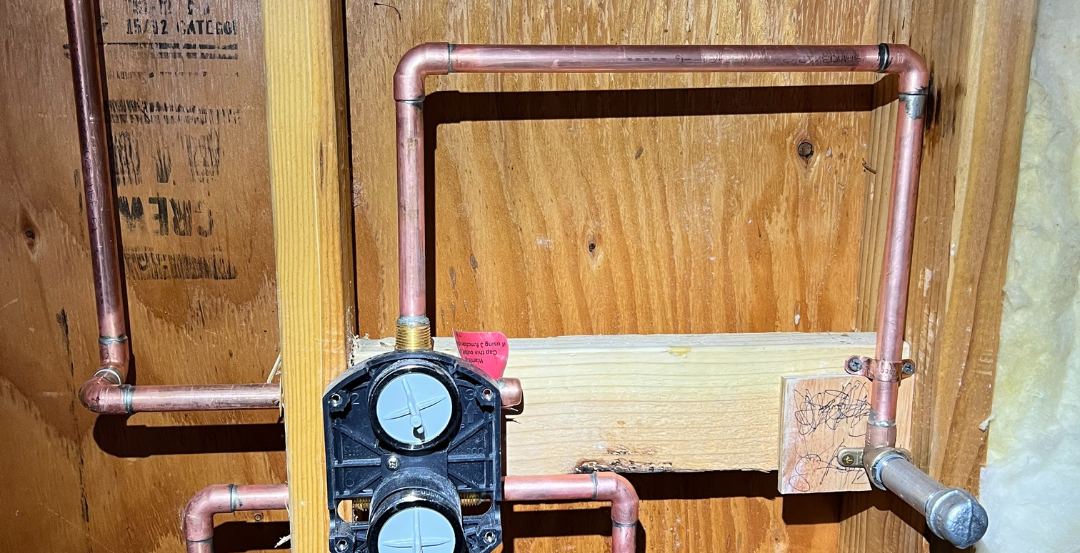
Southern California water is hard, and decades of it leave scale on every surface it touches. In fixtures, that is a cleanable aerator screen. Inside older galvanized steel pipes it is worse: corrosion and scale grow inward until a pipe that started at three-quarters of an inch is passing a fraction of its design flow. That is why pressure problems in mid-century homes are so often worst at the fixtures farthest from the meter, and why the fix eventually becomes repiping rather than another round of fixture swaps.
What does a failing pressure regulator do?
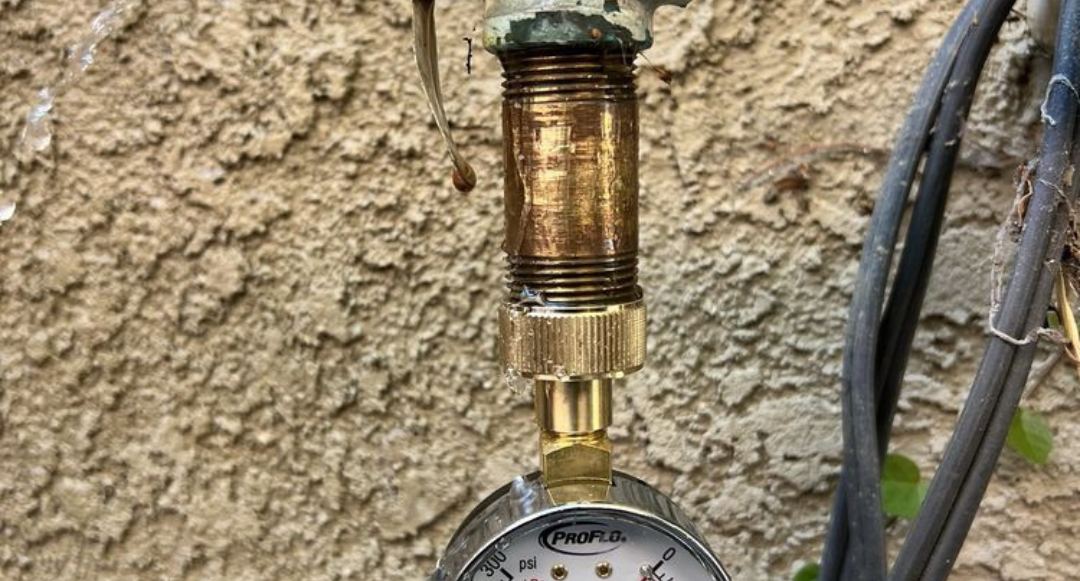
The pressure regulator (PRV) sits where the supply enters the house and knocks street pressure down to a safe level. Regulators wear out in 10 to 15 years, and they fail in both directions: some drift low and starve the house, others drift high and quietly overload it. The Uniform Plumbing Code, published by IAPMO, requires regulation above 80 psi because sustained high pressure damages pipes, hoses, and appliances.
This is the diagnostic twist most homeowners never hear: a bad regulator can produce weak showers today and a burst supply hose next month, because the failure mode swings both ways. A two-minute gauge test at a hose bib reads the truth either way.
Could low pressure mean a leak?
Yes, and it is the cause worth ruling out first, because it is the one actively doing damage. A supply-side leak bleeds off pressure while it soaks whatever surrounds the pipe. The EPA’s leak statistics put one home in ten above 90 wasted gallons a day, and pressure loss is one of the few symptoms a hidden leak gives. The quick check: with every fixture off, watch your meter for 20 minutes. Movement means water is going somewhere. If the pressure drop comes with warm floor spots or damp odors, read our guide to slab leak warning signs next.
Why replacing fixtures rarely fixes it
A new showerhead cannot push water through a corroded pipe or a failing regulator; it just decorates the symptom. That is the same lesson that runs through everything we write, including why plumbing keeps breaking: find the cause once, instead of paying to treat the symptom repeatedly.
The efficient path is one diagnostic visit covering the four layers: static pressure at the regulator, flow at the fixtures, the meter test for leaks, and a look at pipe material and age. Each layer implicates or clears one cause, and you end the visit knowing which repair actually changes your mornings.
Best Coast Plumbing diagnoses and fixes pressure problems across Thousand Oaks and the surrounding Ventura and LA County area, from regulator swaps to full repipes. Call (805) 410-9197 for a free estimate.
Questions Homeowners Ask Us