


Hard Water in the Conejo Valley: What It Does to Your Pipes, Fixtures, and Water Heater
 Reviewed by Brendan Lee, C-36 Licensed Plumbing Contractor
|
Published August 25, 2026
|
7 min read
|
C-36 Licensed Plumbing Contractor, Lic. #1127602
Reviewed by Brendan Lee, C-36 Licensed Plumbing Contractor
|
Published August 25, 2026
|
7 min read
|
C-36 Licensed Plumbing Contractor, Lic. #1127602
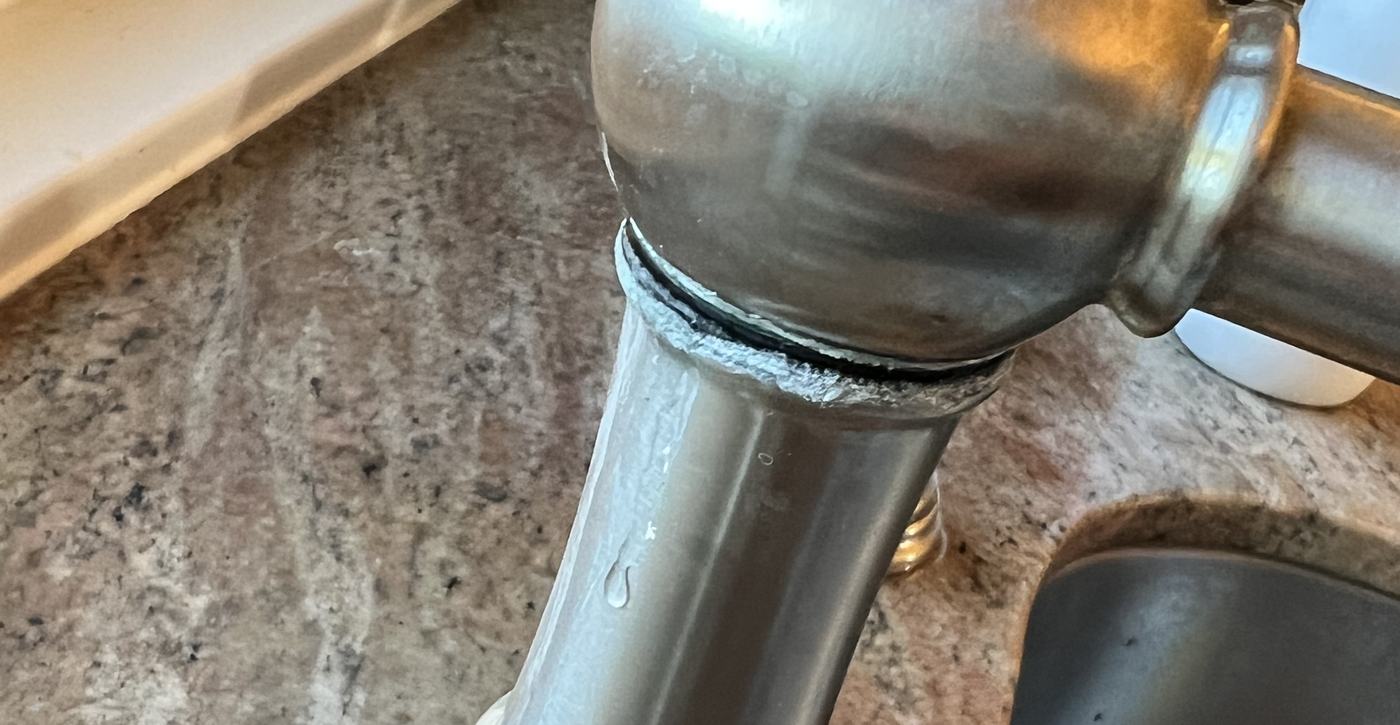
Most of the water delivered to Conejo Valley homes is imported through regional wholesalers and is hard, meaning it carries a high load of dissolved calcium and magnesium. That mineral load builds scale inside pipes, fixtures, and water heaters, which shortens equipment life and raises energy use. It is safe to drink, but your plumbing pays the price over time.
If you have ever scraped white crust off a showerhead or found cloudy spots on glassware that will not wash off, you have already seen the evidence yourself. The same crust shows up around the base and joints of kitchen faucets, like the one in the photo above. This post covers what that mineral load is doing inside your plumbing, and what actually helps.
Is the water in Thousand Oaks and the Conejo Valley actually hard?
Yes. The U.S. Geological Survey classifies water above 121 milligrams per liter of dissolved minerals as hard, and above 180 milligrams per liter as very hard, per the USGS hardness of water scale. Local supplies in the Conejo Valley typically fall in the hard to very hard range. Most homes here receive imported State Water Project water delivered through Calleguas Municipal Water District, a member agency of the Metropolitan Water District of Southern California. Your water provider publishes the exact hardness numbers for your address every year in its Consumer Confidence Report, which is worth a look.
What does hard water do to your pipes?
As hard water moves through your plumbing, dissolved minerals slowly come out of solution and stick to the inside of the pipe as scale. The effect builds for years before you notice it:
- Narrowed pipes: Scale builds up in layers, and water pressure and flow gradually drop, especially on the hot side, since heat speeds up mineral deposit.
- Stressed joints and valves: Scale collects at fittings, angle stops, and shutoff valves, which is one reason older valves seize or weep.
- Shorter fixture life: Faucet cartridges, showerheads, and toilet fill valves wear out faster when they are working against mineral buildup.
Homes in this area built in the 1960s through the 1980s have been living with this water for decades, so the buildup inside original pipes can be substantial. On drain and repipe jobs around the Conejo Valley our technicians regularly open up older lines that have visibly narrowed from decades of scale.
Does hard water damage water heaters?
This is where hard water costs homeowners the most. In a tank water heater, minerals settle out of the heated water and form a sediment layer on the bottom of the tank. That layer sits between the burner and the water, so the heater runs longer to do the same job. The U.S. Department of Energy recommends periodically draining sediment from tank water heaters as basic maintenance for exactly this reason.
The symptoms are easy to recognize:
| Symptom | What is happening |
|---|---|
| Rumbling or popping sounds | Water is boiling up through the sediment layer |
| Hot water runs out faster | Sediment is taking up tank capacity |
| Higher gas or electric bills | The burner runs longer against the sediment blanket |
| Rusty or cloudy hot water | The tank liner or anode is breaking down |
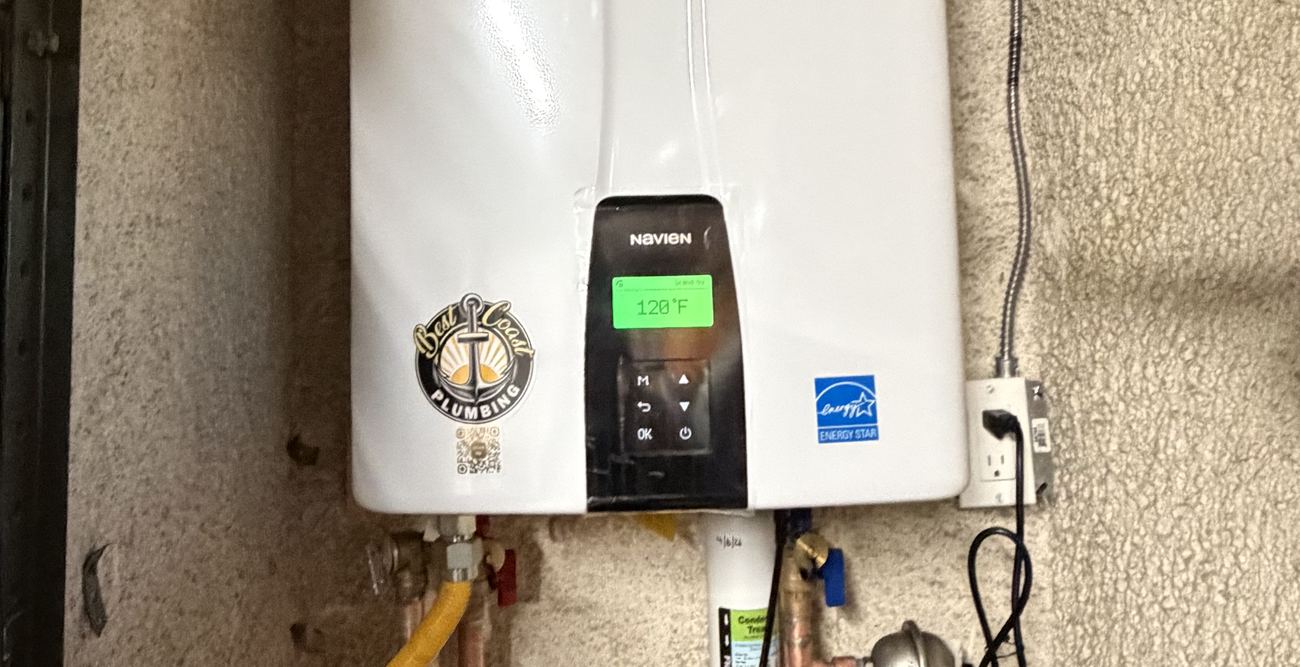
Tankless water heaters are not immune. Scale coats their heat exchanger, and most manufacturers call for periodic descaling in hard water areas to keep the unit efficient and the warranty intact. If your tank heater is rumbling, or your tankless has never been descaled, our water heater repair and maintenance team can flush it, inspect it, and tell you honestly where it stands. Sediment is also one of several problems that build quietly out of sight, and our guide to hidden plumbing problems that cost homeowners thousands walks through the rest.
Do I need a water softener in the Conejo Valley?
Not every home needs one, but in hard water areas a softener or conditioner is one of the few upgrades that protects the whole plumbing system at once. Here is a fair way to think about it:
- Worth considering if: you are replacing a water heater and want the new one to last, you are seeing scale on fixtures within months of cleaning them, or you are repiping and want to protect the new lines.
- Less urgent if: your fixtures and heater are near the end of their life anyway, or you are planning a larger remodel where the decision fits better later.
Softener sizing and drain routing matter, and so do local rules on discharge, so it is worth having a professional plumbing technician look at your setup rather than guessing from a box store aisle. We are happy to walk through the options during a free onsite estimate during standard hours, with no pressure attached.
What can you do about hard water right now?
Even without a softener, a few habits slow the damage down:
- Flush the water heater: Draining sediment periodically is the single best defense for a tank heater in hard water.
- Descale tankless units: In hard water areas, regular descaling keeps the heat exchanger efficient.
- Clean aerators and showerheads: Soaking them in white vinegar dissolves surface scale and restores flow.
- Watch your water pressure: High pressure plus scale is hard on valves and supply lines. Mary M. of Westlake Village called us about a rumbling water heater, and while we were there we found her water pressure registering far too high and installed a new pressure regulator and relief valve. Catching both issues in one visit is common with hard water homes. And if your problem runs the other direction, our post on why low water pressure is not normal explains how scale is often behind that too.
- Replace worn fixture parts early: A fixture and toilet repair visit for a seizing valve or crusted faucet is far less expensive than the water damage a failed part can cause.
Serving Thousand Oaks, Westlake Village, and homes across the Conejo Valley. All work is performed under our California C-36 plumbing contractor’s license (CSLB #1127602).
Questions Homeowners Ask Us