


Does Your Home Need a Repipe? Warning Signs, Copper vs. PEX, and What to Expect
 Reviewed by Brendan Lee, C-36 Licensed Plumbing Contractor
|
Published September 23, 2026
|
7 min read
|
C-36 Licensed Plumbing Contractor, Lic. #1127602
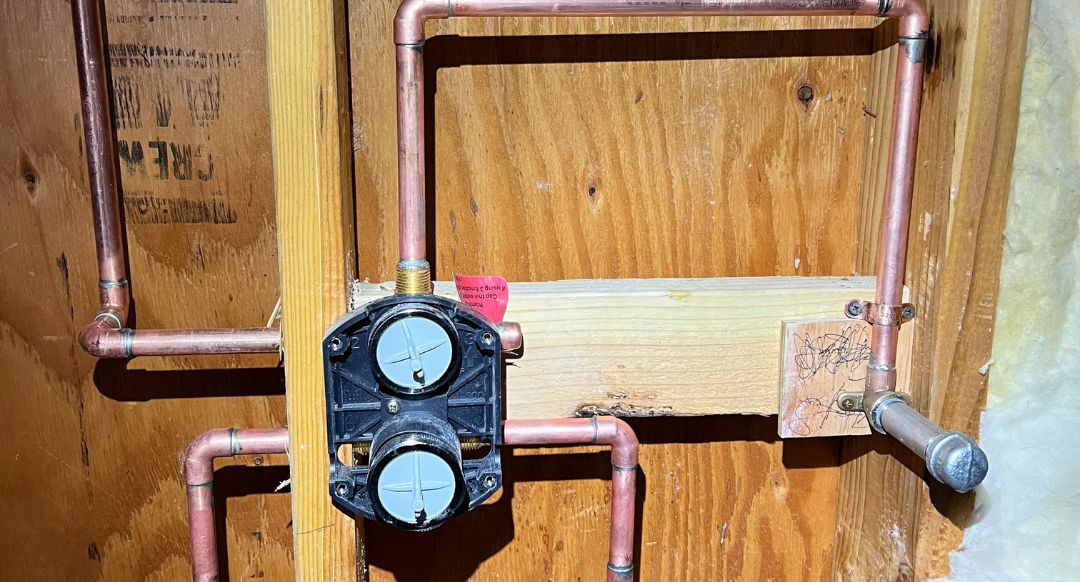
One leak in otherwise healthy pipe usually needs a repair. Recurring leaks, rusty water, declining pressure, or original galvanized steel pipes in a home built before the 1970s can indicate a system that needs replacement.
When pipes are failing throughout the house, a whole-house repipe usually costs less over time than repeated repairs. Both copper and PEX are accepted in California. The right choice depends on your home.
Signs your pipes may be failing
Pipes often show signs of deterioration years before they fail. Watch for:
- Leaks in multiple locations: One copper pinhole leak may be isolated. A second or third leak in different rooms can indicate widespread thinning of the pipe walls.
- Rusty, brown, or yellow water: Discoloration, especially in the morning or after time away, is a common sign of galvanized steel corroding internally.
- Gradually declining water pressure: Corrosion and mineral scale restrict flow as they build up inside pipes. Our article on low water pressure explains other causes to rule out.
- Higher water bills without increased use: A hidden leak inside a wall or slab may be responsible. According to EPA WaterSense, household leaks waste nearly one trillion gallons nationwide each year. Roughly 10% of homes have leaks that waste at least 90 gallons a day.
- Visible corrosion or moisture damage: Green or white deposits on copper fittings, damp spots, buckled flooring, and unexplained stains warrant inspection. If you suspect a leak beneath the house, see our guide to slab leak warning signs.
- Original galvanized steel supply lines: Many homes built in the 1950s and 1960s in Thousand Oaks, Newbury Park, Westlake Village, and the San Fernando Valley still have their original pipes. Those lines have been in service for 60 years or more, beyond their intended lifespan.
Any of these signs deserves an inspection. Several together may indicate that the entire system needs attention.
Should you repair the leak or repipe the house?
The condition of the remaining pipes determines whether a repair is enough.
| What we find | Typical recommendation |
|---|---|
| One pinhole leak in otherwise sound copper | Repair the leak or reroute a short section |
| A second or third leak in different areas within one or two years | Compare the cost of repiping with further repairs |
| Galvanized steel supply lines | Repipe because deterioration can lead to additional leaks |
| Copper with corrosion at many fittings and visible thinning | Repipe |
| Pressure-related leaks in otherwise sound pipe | Correct the pressure regulator problem and repair the leak |
High water pressure causes many of the burst pipes and failed fittings we encounter. On every leak call, we test the pressure and check the regulator before recommending more extensive work. If the regulator is the problem and the pipes are sound, we’ll recommend addressing the pressure and repairing the leak.
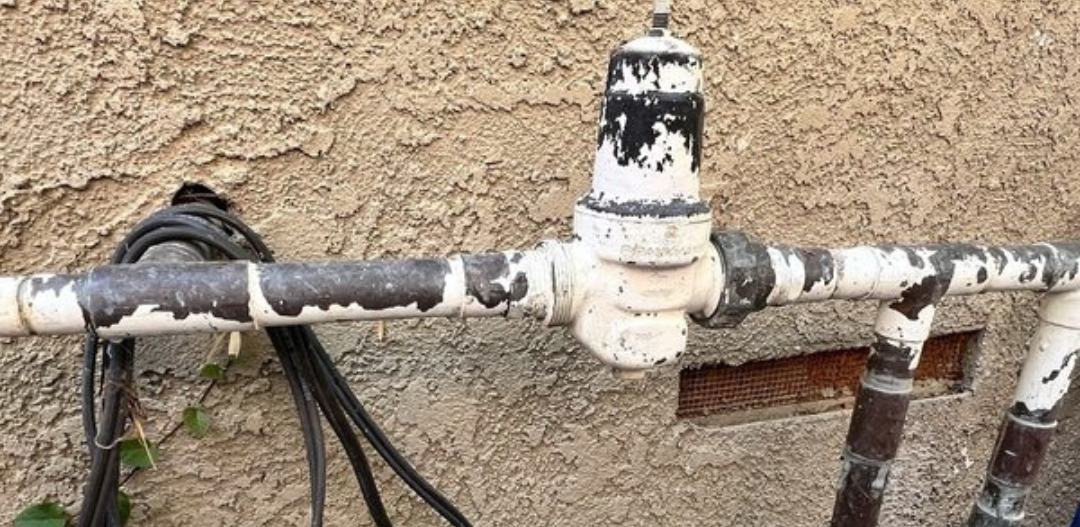
Water damage is also a common reason for homeowners insurance claims. The Insurance Information Institute reports that water damage and freezing account for a substantial share of homeowner property claims each year. Replacing deteriorated supply lines addresses a source of that risk throughout the house.
Copper vs. PEX for Southern California homes
Both materials have advantages. Your home’s layout, water conditions, and pipe locations determine which is appropriate.
Copper
Copper has the longest track record among residential water piping materials. It withstands heat and UV exposure, making it suitable for exposed outdoor runs and connections near water heaters. It is also fully recyclable.
Its drawbacks include higher material and labor costs. Aggressive water conditions and high pressure can also thin copper over time.
PEX
PEX is flexible plastic tubing used in North American homes for decades and accepted under the California Plumbing Code.
It can run through walls and joists with fewer fittings, reducing potential leak points and the number of access openings needed. A PEX repipe is usually faster and less disruptive.
Hard water scale does not bond to PEX as it does to metal, which is an advantage for local homes. Our article on hard water in the Conejo Valley explains its effects on plumbing.
PEX must be protected from sunlight and properly supported and protected where it passes through framing.
Using both materials
Many of our repipes combine PEX inside walls and ceilings with Type L copper for stub-outs, exposed sections, and water heater connections. Our water line repair and repiping team sizes the new system with Southern California’s hard water conditions in mind.
What happens during a whole-house repipe?
A typical single-family home in our area takes two to three days. The process includes:
- Evaluation and pressure testing: A professional plumbing technician identifies the pipe material, tests static water pressure, and maps every fixture. We determine whether the house needs a repipe or a repair.
- Access planning: We plan openings to minimize drywall removal, usually making small cuts near fixtures and at selected points along the pipe routes.
- New supply lines: We shut off the water and install new lines from the main shutoff to every fixture. Existing lines are abandoned in place or removed where accessible. Most homes have water restored overnight between workdays.
- New valves: We install new angle stops at every fixture and replace the main shutoff so you can stop the water in an emergency.
- Pressure testing and inspection: We pressure-test the entire system before closing the walls. When a permit is included in the approved scope, the inspection takes place at this stage.
- Drywall repair: Patching is included when specified in your approved proposal. Otherwise, we help coordinate a qualified drywall contractor to close the openings and prepare them for paint.
Two recent repiping projects
The first began with a burst pipe in a primary bathroom over a holiday weekend. The homeowner needed to stop the water and arrange for a remediation crew. We completed the immediate repair, then assessed the remaining plumbing.
The rest of the house had the same aging pipes, making additional failures likely. The homeowner chose a whole-house repipe rather than waiting for another emergency.
The second involved an older home overseen by a property manager. Its galvanized supply lines had rusted through and were leaking in several places. Repairing one section of the 60-year-old piping would leave the remaining deterioration unresolved, so we recommended and completed replacement.
Both projects followed pipe failures. If your home still has its original supply lines, an evaluation can help you plan before an emergency. We offer free onsite estimates during standard business hours.
We serve Thousand Oaks, Westlake Village, Newbury Park, and communities throughout Ventura County and the San Fernando Valley. All work is performed under our California C-36 plumbing contractor’s license, CSLB #1127602.
Frequently asked questions